MY STORY
Sayce
Holmes-Lewis
Sayce Holmes-Lewis is a systems change strategist, community activist and founder of Mentivity and Mentivity House, a community and youth space on South London’s Aylesbury Estate, where he grew up and lived for 24 years.
For nearly three decades, his work has been shaped by a simple conviction: talent and potential exist everywhere, but access to opportunity, social capital, investment and power does not. A proud product of Southwark, Sayce began his career developing young people through sport. Football became both his profession and his first vehicle for social change, teaching him about relationships, belonging, resilience and the importance of creating environments in which people can fulfil their potential.
His own journey took him beyond South London. A football scholarship offer from Howard University in 2001 was followed by periods playing professionally in the Republic of Ireland and Romania between 2002 and 2004, before receiving an international call-up to represent Barbados in 2012, aged 29. Alongside his playing career, Sayce spent years coaching and mentoring young footballers, supporting players including Ademola Lookman, Reiss Nelson, Jadon Sancho, Tammy Abraham and Jordon Ibe on journeys that would ultimately take them to the highest levels of the professional game.
Those experiences reinforced an idea that would eventually extend far beyond football:
Potential is rarely the problem. Access is.
His connection with Barbados brought that idea into sharper focus. Having seen talented young players without the same proximity to professional pathways available in England, Sayce worked with the Barbados Football Association and Crystal Palace in 2016 to create an opportunity for four young Barbadian players to live, train and play football in England, with the possibility of earning professional contracts.
It was an early expression of what would become a defining feature of his career: using relationships, networks and institutional access to create opportunities for others.
From Football To Youth Work.
Football gave Sayce his first vehicle for developing young people, but increasingly he became interested in what happened beyond the pitch.
At 28, he enrolled at the University of East London to study Youth and Community Work, formalising years of frontline experience and deepening his understanding of informal education, community development and the wider systems surrounding young people.
It was a turning point.
Sayce qualified as a youth worker and began thinking more intentionally about the spaces young people needed. Having experienced the importance of youth and community provision himself, he held a simple ambition: one day, he wanted to create a youth club of his own. Not simply somewhere for young people to go, but somewhere they could belong. A space built around trusted adults, relationships, sport, creativity and opportunity. Somewhere young people could feel safe, develop their identity and be encouraged to imagine more for themselves.
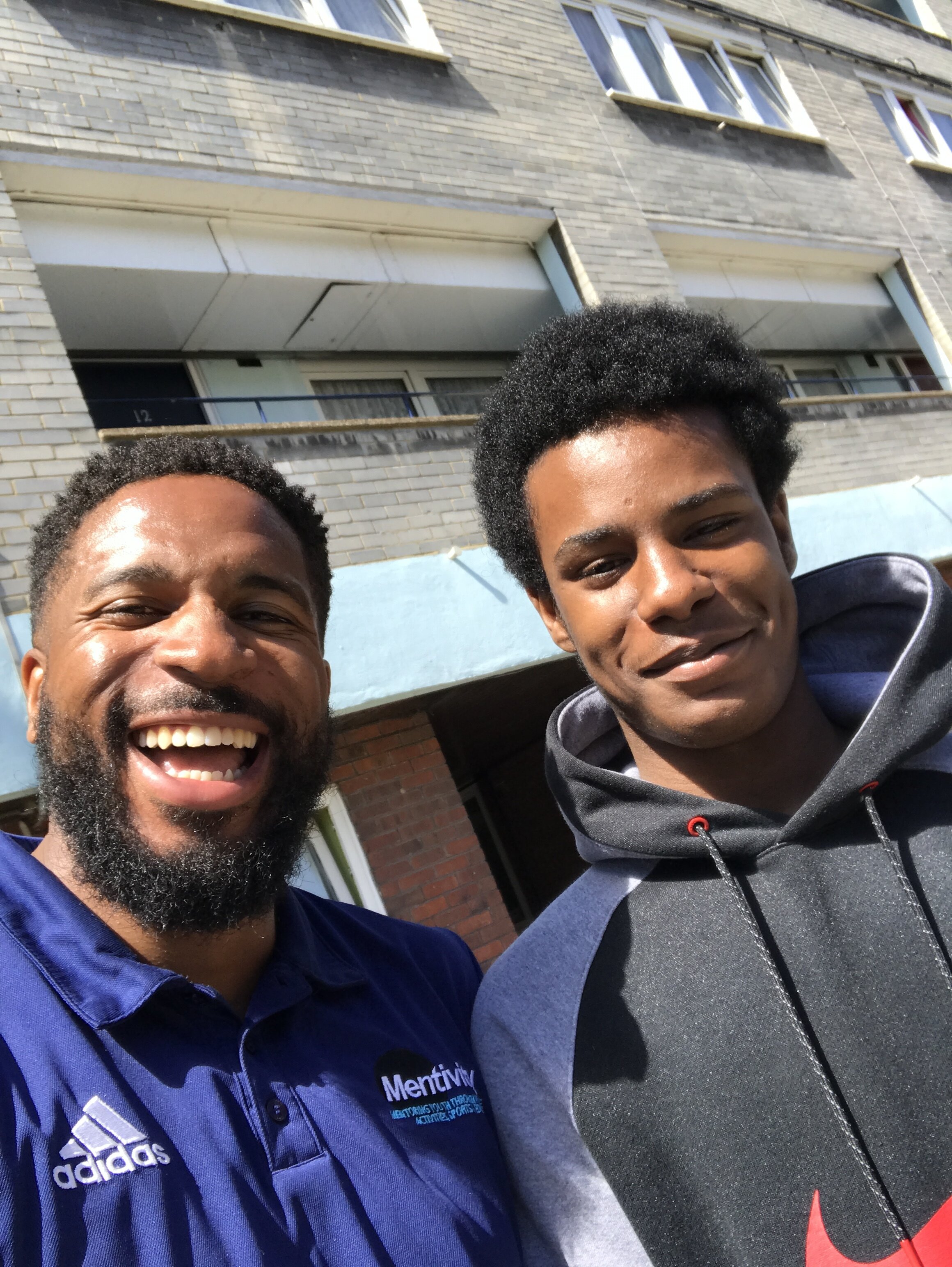
In 2016, Sayce founded Mentivity, bringing together almost two decades of coaching, mentoring, youth work and lived experience. What began with mentoring evolved into a much wider approach to youth and community development, connecting young people with education, trusted relationships, experiences and networks designed to increase their confidence, opportunity and social capital.
Under Sayce’s leadership, that grassroots model grew significantly.
Between 2023 and 2025, Sayce mobilised more than £1.5 million in strategic investment into Mentivity’s work, building innovative partnerships with organisations and brands including Goldman Sachs, Hellman & Friedman, Spotify, Jordan Brand and Nike, Foot Locker, Avanade, Hogan Lovells, Sky, Bauer Media and Channel 4.
For Sayce, these relationships have never been simply about funding or traditional corporate social responsibility. They are about connecting institutional resources with community knowledge, using capital, expertise and networks to create opportunities and social value capable of enduring beyond a single programme or funding cycle.
But one ambition remained: the youth and community space he had imagined years earlier.
Bringing The Vision Home.
In March 2024, Mentivity House opened on the Aylesbury Estate.
For Sayce, it brought several parts of his life together: the estate where he had grown up and lived for 24 years, the profession he had chosen in his late twenties, the organisation he had spent years building and his belief that communities need permanent spaces in which relationships, belonging and opportunity can grow.
The youth club he had once imagined had finally found a home, on the estate where his own story began.
Today, Mentivity House is much more than a youth club. It provides a home for mentoring, alternative education, youth provision, sport and esports, creative and digital activity, workshops, community events and partnerships, creating a physical anchor for young people, families and the wider community.
Its location is fundamental to its purpose.
The Aylesbury Estate sits at the centre of one of London’s most significant regeneration programmes. Against that backdrop of regeneration and gentrification, Mentivity House represents Sayce’s belief that physical regeneration must be matched by investment in people and social infrastructure. Buildings can transform a neighbourhood. But genuine regeneration should also increase the opportunity, social capital and agency of the people who already call that neighbourhood home.
In April 2025, His Royal Highness The Prince of Wales visited Mentivity House in recognition of Mentivity’s work with young people and communities. For Sayce, the significance was not simply who walked through the doors, but where those doors were located: a community institution built on the same estate that had shaped his own life.
Creativity, Storytelling And The Power To Shape The Narrative.
As Mentivity has evolved, creativity and storytelling have become an increasingly important part of Sayce’s work.
Mentivity House has been digitised with a dedicated podcast and vodcast facility supported by Spotify and Bauer Media, creating infrastructure through which young people and communities can develop skills, produce content and tell their own stories.
This builds on Sayce’s work across film and media. In partnership with Spotify, he executive produced the short documentary The Centre, alongside director Adeyemi Michael, exploring the importance of youth and community spaces and the lives shaped within them.
Sayce also spearheaded ContentMENT in partnership with Channel 4, using media, creativity, communication and oracy to strengthen youth voice and create pathways into the creative industries.
His involvement in the Clyde Best documentary, in which he features, has created another connection between football, education and storytelling. That involvement has since evolved into supporting the wider educational and legacy work surrounding Clyde Best’s life and impact, using the story of one of football’s pioneering Black players to explore race, migration, identity, resilience and the barriers confronted by those who helped transform the game.
Together, these projects represent another dimension of Sayce’s approach to systems change: the power of creativity to shift narratives, preserve community memory and create opportunity.
For Sayce, who gets to tell the story, whose experiences are documented and whose voices become part of the public record are themselves questions of power. His ambition is not simply to tell stories about communities, but to help create the platforms, skills and opportunities that enable communities to shape their own narratives.
Local Roots, International Perspective.
While Southwark remains the foundation of Sayce’s work, his perspective has increasingly travelled.
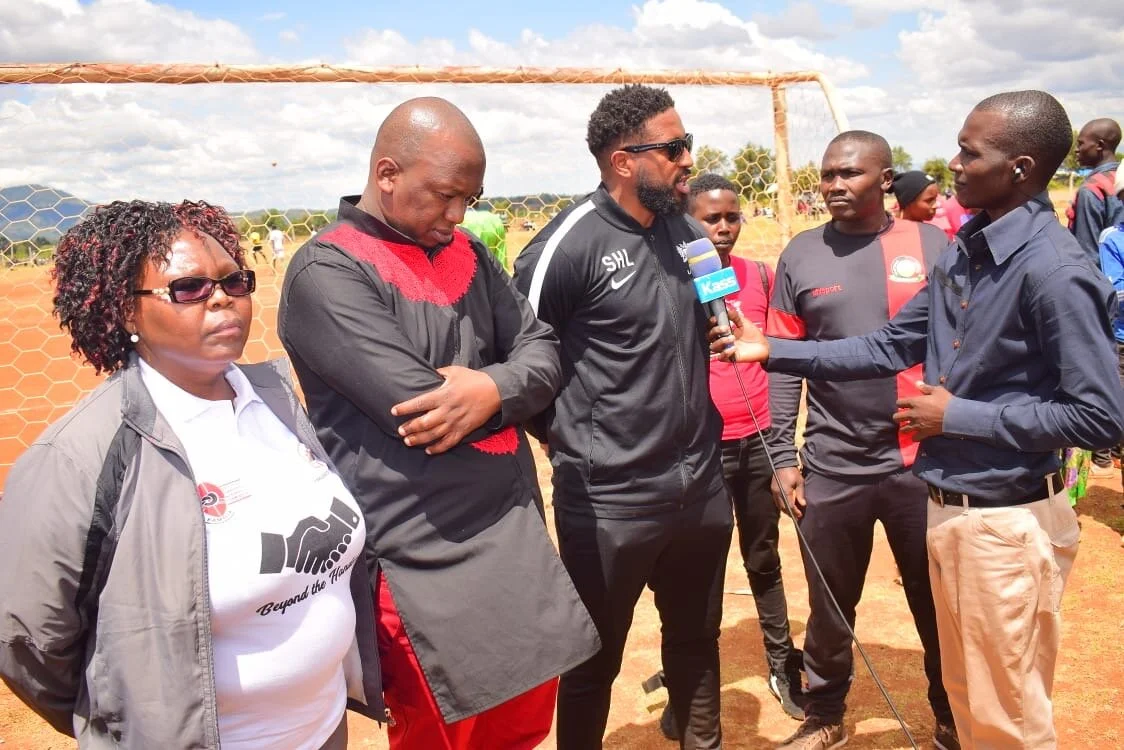
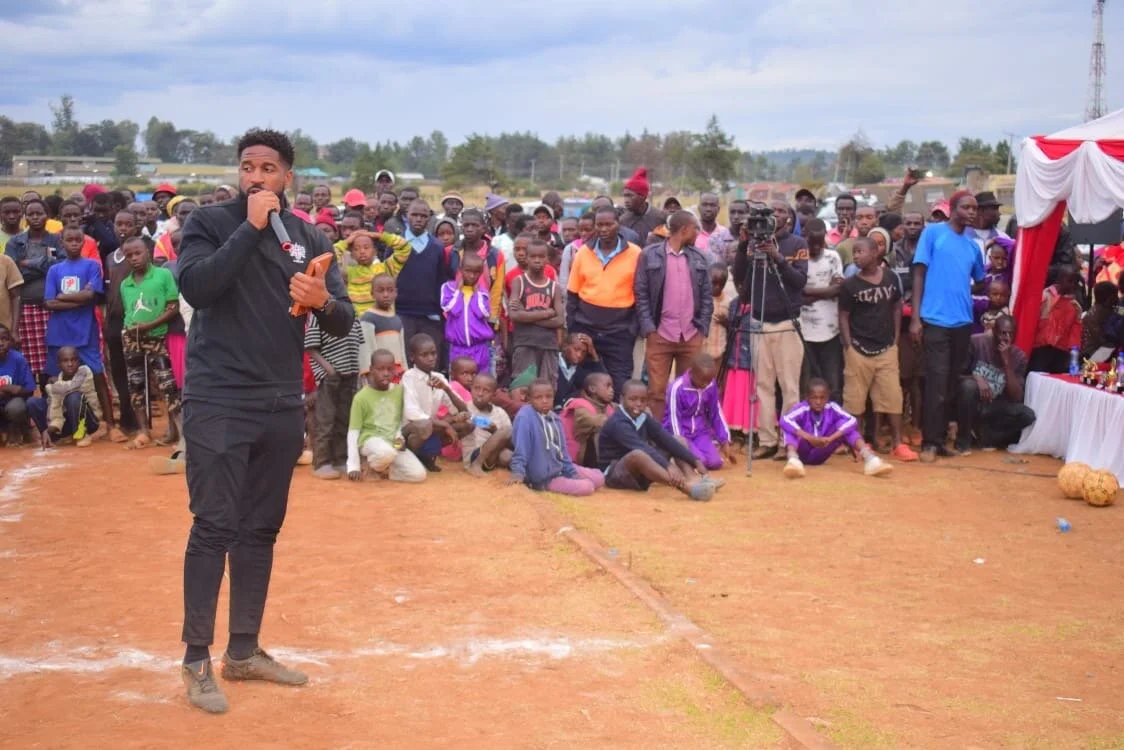
In 2023, he undertook consultancy work with ADRA UK in Zambia, applying his experience of youth development and community engagement in a different social and cultural context. His ongoing work in Kenya with grassroots organisations and government continues to explore how community knowledge, institutional partnerships and sustainable investment can combine to create stronger outcomes.
From Southwark to Barbados, Zambia and Kenya, the contexts may differ, but Sayce continues to encounter the same fundamental question:
How do we ensure the people closest to society’s challenges have access to the relationships, resources and influence required to shape the solutions?
That question also sits at the heart of his work in London.
Sayce serves alongside the Mayor of London on the London Policing Board, bringing nearly three decades of frontline and community experience into one of the capital’s most significant spaces for policing scrutiny and accountability. His work encompasses racial disproportionality, stop and search, youth justice, trust, accountability and policing by consent. More broadly, it represents the evolution of his career from working alongside people experiencing the consequences of systems to helping scrutinise, influence and reshape the systems themselves.
His ability to move between communities, boardrooms and public institutions, translating lived experience into strategy while ensuring those most affected by decisions have a voice in shaping them, has become one of the defining characteristics of his work.
Leadership Through Change.
Building an institution has also taught Sayce that systems change requires resilience. By 2025, the cumulative effects of austerity were being felt across Britain’s youth and community sector, while a changing global climate around diversity, equity and inclusion was reshaping corporate investment priorities.
For Mentivity, it became a defining moment.
Rather than attempting to recreate the funding environment that had supported its previous growth, Sayce asked a more fundamental question:
How do you build a community institution capable of surviving when the environment around it changes?
He led Mentivity’s evolution into a charitable structure, strengthened its governance and developed a more diversified model combining charitable and philanthropic investment, public-sector commissioning, corporate partnerships, earned income and innovation. It was more than an organisational restructure. It represented a shift in how Sayce thought about the future of community organisations: not simply as recipients of funding, but as institutions capable of building assets, generating income, developing partnerships and creating long-term value for the communities they serve.
The experience reinforced a principle that now sits at the heart of his thinking:
Sustainable communities require sustainable institutions.
When Mentivity celebrated its 10th anniversary in February 2026, the milestone represented more than longevity. It marked the beginning of a second decade focused on resilience, sustainable growth and ensuring the organisation continues to evolve without losing the community-rooted purpose on which it was founded.
Recognition Without Losing The Roots.
Recognition of Sayce and Mentivity’s work has grown alongside the journey.
In 2019, Mentivity was named Mentoring Programme of the Year at the National Mentoring Awards. In 2020, Sayce received a Southwark Civic Award and the BBC 1Xtra Future Figure Award, where he was recognised alongside figures including Sir Lewis Hamilton and Stormzy.
He was named Most Inspirational Person of the Year at the 2022 MBCC Awards and subsequently received the 125th Anniversary Award from the University of East London, his alma mater in 2023, for outstanding service to London’s communities. The recognition carried particular meaning: the institution where Sayce had chosen to formalise his commitment to youth and community work was now recognising what that commitment had become.
In 2024, HSBC UK and the UK Black Business Show named Sayce among the Top 25 Black Entrepreneurs to Watch. In 2025, he was named Community Broker of the Year at the Future Ed Awards, recognising his service to communities through Mentivity.
The Next Chapter.
Nearly three decades after beginning his career developing young people through sport, Sayce’s work now sits at the intersection of community, business, government, education, policing, sport, culture, regeneration and social investment.
From the Aylesbury Estate to professional and international football; from qualifying as a youth worker to building Mentivity House on the estate where he grew up; and from grassroots delivery to boardrooms and public institutions, his journey has shaped a distinctive understanding of how opportunity is created, who gets access to it and what institutions can and should do differently.
Now, Sayce is focused on what comes next: bringing together ambitious people, organisations and institutions who believe, as he does, that communities should not simply be consulted or served, but invested in as partners, creators, leaders and most importantly decision makers.
The ambition is to build stronger bridges between community insight and institutional power, investment and opportunity, creativity and social change; developing partnerships and new models of community investment that create lasting value and open doors for the generations coming behind.
After 27 years, Sayce’s belief remains simple:
Potential has never been in short supply.
The opportunity now is to build the infrastructure, partnerships, institutions and systems that allow it to flourish, and ensure the next generation inherits more opportunity, more agency and more power to shape what comes next.

WORKING WITH SAYCE: